
Three things: Gun control, access to universal healthcare, and vaccinations.
Three simple things that aren’t that simple. Three topics that we can’t seem to get right or agree upon on a basic level, and they all funnels back into one central ideological struggle:
What is more important, the individual or the community?
Gun control, access to healthcare, and vaccinations are all equally important topics. If managed correctly, changes in the laws of access and how things are mandated could have a meaningful and lasting impact on people in the United States.
However, adopting new mandates in these three specific areas has one very important caveat: In order to institutionalize such change and force the whole to change their behavior, everyone in the system has to be willing to give up some of their individual rights. Reduced individual freedom is the price for safety and equality in this – and many other – issues. At its core, it’s a struggle between individualism and collectivism.
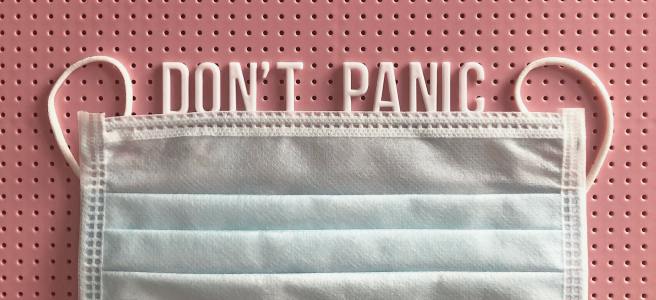
So this brings us to the question: to mask or not to mask?
Well, how effective are masks really in stemming the spread of the pandemic?
Let’s look at the current facts. The World Health Organization (WHO) recommends using masks in these scenarios:
- If you are healthy, you only need to wear a mask if you are taking care of a person with COVID-19.
- Wear a mask if you are coughing or sneezing.
- Masks are effective only when used in combination with frequent hand-cleaning with alcohol-based hand rub or soap and water.
- If you wear a mask, then you must know how to use it and dispose of it properly.
Promoting the use of single-use PPE to the general public while medical institutions are struggling to find the level of PPE that they need — and not just enough PPE for each first responder to have materials that they must then reuse, but enough personal protective equipment to be used and disposed of as recommended — borders on the unethical. But it does not detract from the reality that access to PPE is an important piece of the puzzle. So one must balance the needs of those on the front lines with the needs of the general public, and maybe that means that the emphasis should be placed on the front liners.
For those dedicated to the environment and aware of the shortage of personal protective equipment, an alternative to disposables is reusable products. There are simple instructions available for the DIY construction of masks that are easy to follow for those that don’t even know how to sew. But how effective are they in providing protection other than acting as a politically correct placebo? While non medical grade face masks could possibly inhibit transmission from the wearer to those in close contact, the CDC states that the cloth coverings are not intended to protect the wearer.
Masks are not the panacea and they are marketed as being. It is important to practice several methods in order to reduce the likelihood of transmission of coronavirus through the general public.
Wearing masks, while terrorizing those who choose not to conform, only make people feel good and empowered. But what about the other forms of prevention, namely hand washing? Just a quick search and read on sites like Huffington Post, The Root, livescience.com and many more show that a disturbing percentage of people don’t even wash their hands after they go to the bathroom – let alone as a form of public protection against Covid-19. Outside of coronavirus, so many preventable diseases are spread when people do not wash their hands.
To some degree, this is a question of personal choice and responsibility, but this is also a question of access. Access to water, access to soap, access to the education necessary to know how to effectively wash one’s hands – because 5 seconds under high-pressure water doesn’t cut it. If this doesn’t say it all, there is a day – Global Handwashing Day, October 15 – dedicated to educating people on the importance of washing their hands properly with soap.
So what about handwashing? Why isn’t there mandated handwashing for the general public?
Handwashing could not be regulated unless every single person was tracked – and the IRS cannot even immediately track tax fraudulence – which takes too much time and too many resources.
One step removed from the individual, couldn’t organizations, systems, and institutions be updated to at least provide basic access to soap and running water? Maybe. But oftentimes those “systems” have a hard time making sure that toilet paper is available in public restrooms, forget about soap. It is many times up the the voice of a concerned citizen not afraid to report a lack of TP which helps regulate public restroom needs.
Maybe that means that institutions need to empower the public to collectively act as bathroom soap monitors. Or maybe businesses should be required to hire restroom attendants to track conditions in the W.C. Will businesses be provided a fund for this necessary expenditure when many will be trying to find the funds to pay their other bills in a post-pandemic society? Will there be a government stimulus package that covers hiring a bathroom attendant? Only time will tell.
Finally, there is physical distancing. Standing six feet apart from those who don’t live with you. Another behavioral change that is deceptively simple. Stores that have remained open are doing a wonderful job – under new regulations – to create one-way flows of traffic through store aisles, marking off where people should stand as they cue up in line, and placing staff on lines and in key places to regulate the flow of traffic. But is this new world order no match for the lingering mannerisms of the impatient phone talker, the distracted shopper, or the anxious customer who is one empty paper good aisle away from a nervous breakdown?
Assuming universal hand washing regulation is out and that a world wide change in spacial awareness in all out-of-home settings takes more than 6 weeks to stick, mask-wearing is the easiest thing to regulate because it is the most visible. But when wearing a face mask isn’t supported by other effective – but less visible – behavioral changes, it decreases the effectiveness of even wearing a mask to some possibly yet unknown degree.
Let not the simple donning of protective face wear lull us into a false of security. There are several practices that help to stem the possible spread of coronavirus. Not just one. Wearing a face mask is not the only solution.
We should wash our hands, not touch our faces, keep our distance from one another. These other parts of the equation rely heavily on behavior change to be effective, and all rely on a willingness to put the needs of the community over the desires of the individual.
Which brings us back to gun control, access to healthcare, and vaccinations. Equally complex, dynamic topics that, at their core, are a fight between individual freedom and the desires of the wider community. Three topics that have a comparable social and economic complexity level as legalized pandemic protection measures. Three topics that we are still not able to agree upon, that don’t have a straight answer or solution, and that leave one – well me at least – a bit skeptical of our ability to socially solve the pandemic in one go.
Empty streets and stadiums, cancelled holiday celebrations, and reduced greenhouse gas emissions due to a sharp halt in transportation show that people are more than capable of changing their habits for the good of all. At least over the short term. But long term change is harder to do and takes longer to stick.
So in this most recent fight between individualism and collectivism, what side will win out? And should there even be a fight at all because for the good of all may boil down to for the good of the individual when it comes to a plague.

 Caia Rose